


Securing Remote Access in OT: A Critical Control for Modern Risk

New SANS research reveals how the rapid expansion of connectivity in industrial environments has turned remote access into one of the highest-risk and highest-impact control points in OT cybersecurity. As operations scale across plants, vendors, and cloud systems, organizations that fail to modernize remote access are seeing risk rise while operational friction compounds.

Inside the report, you’ll learn:

Why remote access has become one of the top three initial access vectors in OT incidents globally.

How implementing secure remote access can deliver more than 12% overall risk reduction for industrial organizations.

Why SANS Control 4: Secure Remote Access now sits at the center of modern OT resilience and operational stability.

Get the SANS Whitepaper

Why Secure Remote Access Has Become the Turning Point for OT Security

Key insights from the survey:

Secure remote access does more than restrict connectivity — it enforces identity, context, accountability, and continuous session visibility across OT environments.

Organizations that align Defensible Architecture (Control 2) with Secure Remote Access (Control 4) achieve stronger security without introducing operational friction.

Leading OT teams are using secure remote access to strengthen compliance, protect uptime, and modernize operations — all while keeping the plant moving.
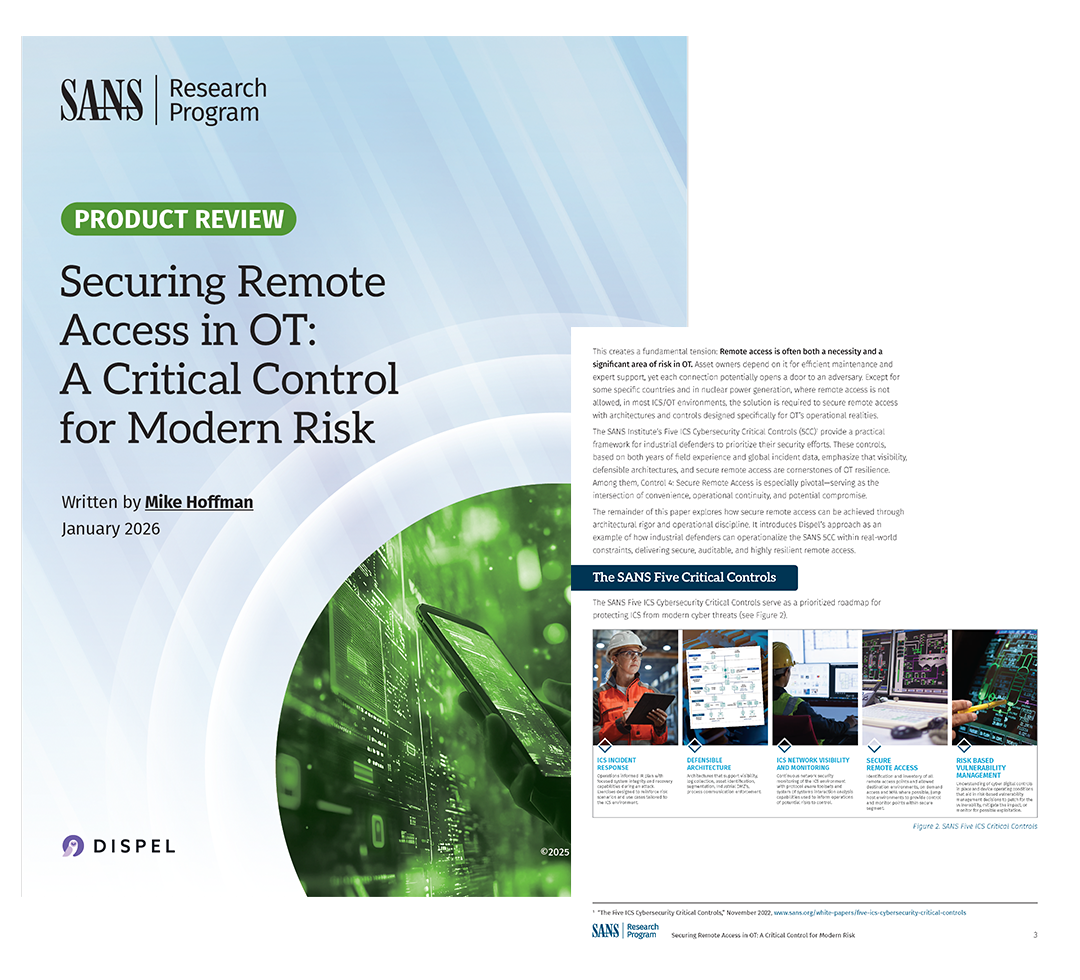

Cover-layout

SANS_Institute_Logo-w

SANS is the most trusted resource for information security training, cyber security certifications and research.